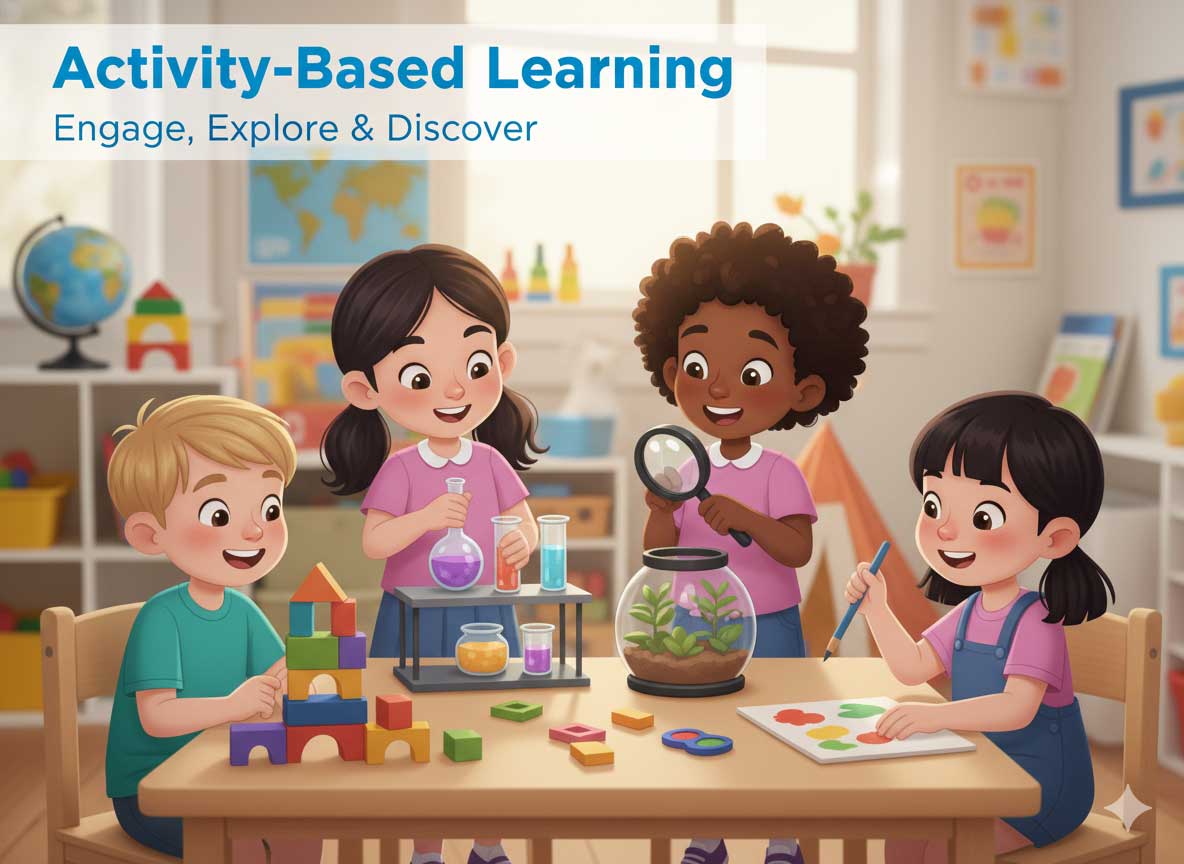
Activity-based learning helps children learn faster because it actively involves them in the learning process rather than making them passive listeners. When children participate in hands-on activities, games, and experiments, their brains process information more effectively, leading to better understanding and longer retention.
This learning approach strongly supports cognitive development. Activities such as puzzles, role-playing, building exercises, and problem-solving tasks encourage critical thinking and logical reasoning. By learning through action, children are able to connect concepts with real-life situations, making learning more meaningful.
Language and communication skills also improve through activity-based learning. Interactive discussions, storytelling, group tasks, and creative expression help children develop vocabulary, confidence, and clarity in communication. These skills grow naturally when children learn by doing and speaking rather than memorizing.
Physical involvement plays a major role in faster learning. Activities that include movement, drawing, sorting, or hands-on interaction improve motor skills and coordination while keeping children engaged. Active learning reduces boredom and increases focus, which directly improves learning speed.
Beyond academics, activity-based learning supports emotional and social growth. Children learn teamwork, patience, empathy, and decision-making through collaboration and play. This holistic development builds confidence and curiosity, helping children learn faster and more effectively.