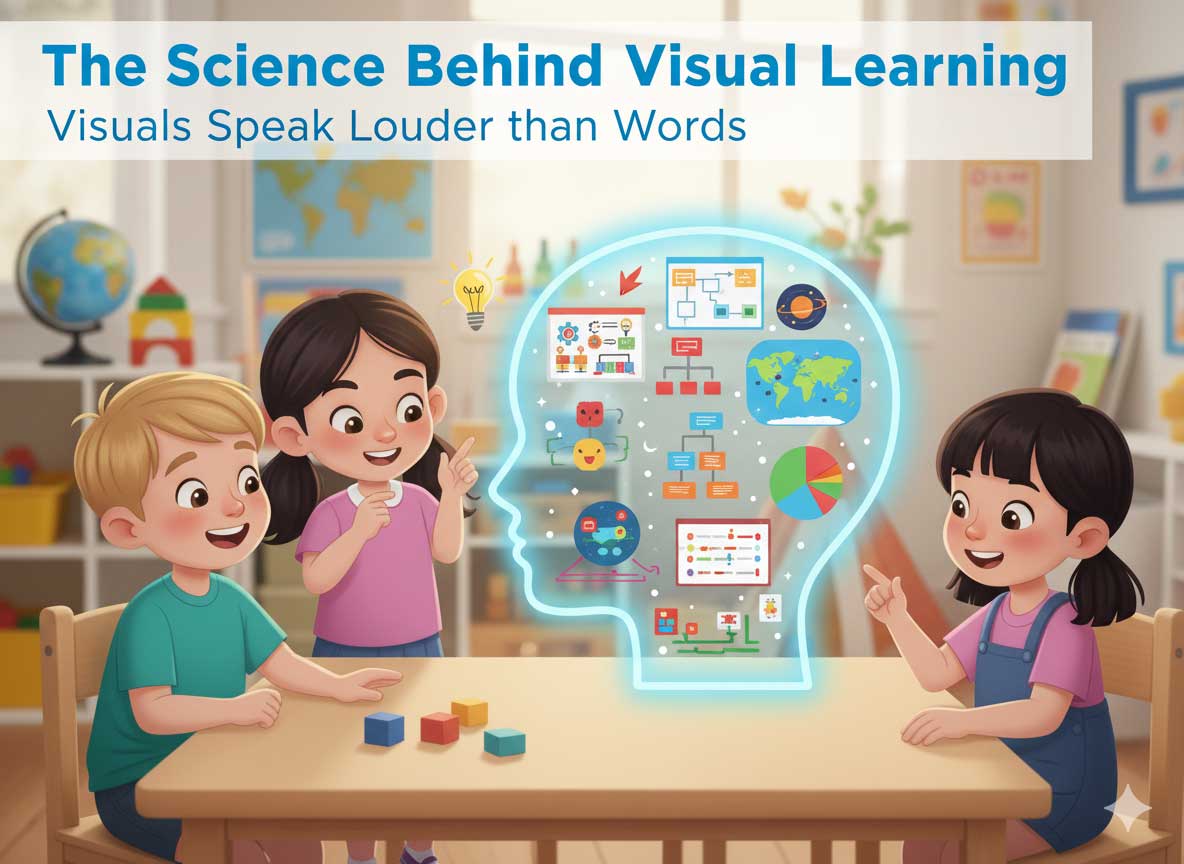
Visual learning works because the human brain processes images far faster than text alone, especially in children. When kids see pictures, symbols, or animations, their brains instantly recognize patterns and meaning. This reduces mental effort and allows children to understand new concepts more quickly and naturally.
Scientific studies show that combining visuals with information improves memory retention. When children learn through images, charts, and videos, multiple areas of the brain are activated at once. This dual processing helps children remember what they learn for longer periods compared to text-only instruction.
Visual learning also supports clearer concept understanding. Abstract ideas like numbers, shapes, time, or scientific processes become easier when presented visually. Diagrams, illustrations, and animations help children “see” how things work instead of trying to imagine them from words alone.
For young learners, visuals improve focus and attention. Bright colors, movement, and visual cues naturally attract a child’s attention and reduce distraction. This is especially important for children who struggle with traditional reading-based learning or shorter attention spans.
Beyond academics, visual learning boosts confidence and engagement. When children understand lessons faster, they feel motivated and curious to learn more. This positive learning experience builds stronger comprehension skills and makes education enjoyable rather than stressful.