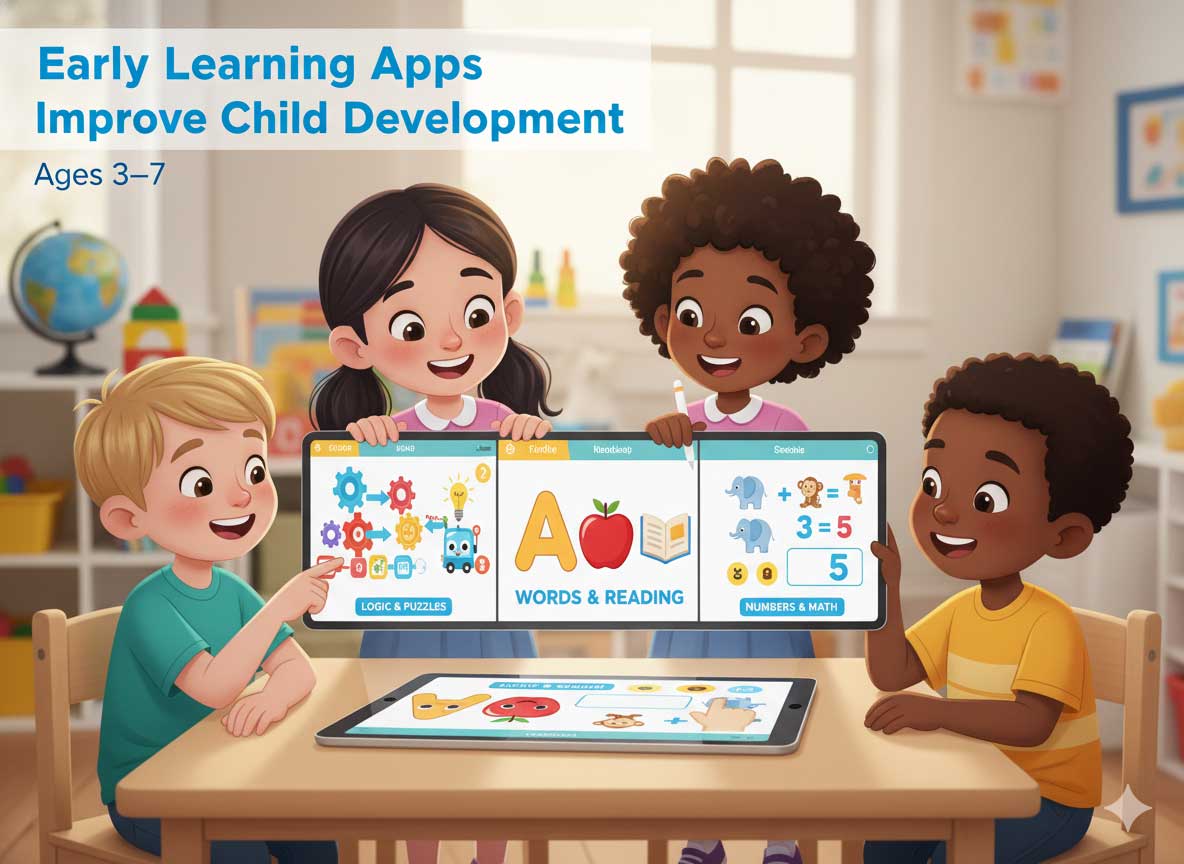
Early childhood between the ages of 3 and 7 is a crucial phase for brain development, where children rapidly build cognitive, emotional, and physical skills. Early learning apps support this stage by combining structured educational activities with play, making learning engaging rather than forced. When designed well, these apps encourage curiosity, focus, and independent thinking instead of passive screen consumption.
One of the biggest benefits of early learning apps is cognitive development. Activities such as puzzles, memory games, and pattern recognition exercises help children improve attention span, logical thinking, and problem-solving skills. Many apps adjust difficulty levels automatically, allowing children to progress at a comfortable pace while staying mentally challenged.
Language development is another key area strengthened by early learning apps. Through phonics, storytelling, and interactive word games, children expand vocabulary, improve pronunciation, and develop early reading skills. Audio-visual repetition helps children understand sounds and sentence structure, especially during the foundational learning years.
Touch-based interactions in learning apps also enhance fine motor skills. Tracing letters, drawing shapes, dragging objects, and tapping sequences improve hand-eye coordination and finger control. These skills are essential for writing, drawing, and performing daily activities that require precision and coordination.
Beyond academics, early learning apps support emotional and social development by teaching children about emotions, decision-making, and empathy through stories and role-based activities. When used in moderation and guided by parents, these apps become powerful learning tools that complement real-world interaction and play, rather than replacing them.